


What is a Dendrogram?
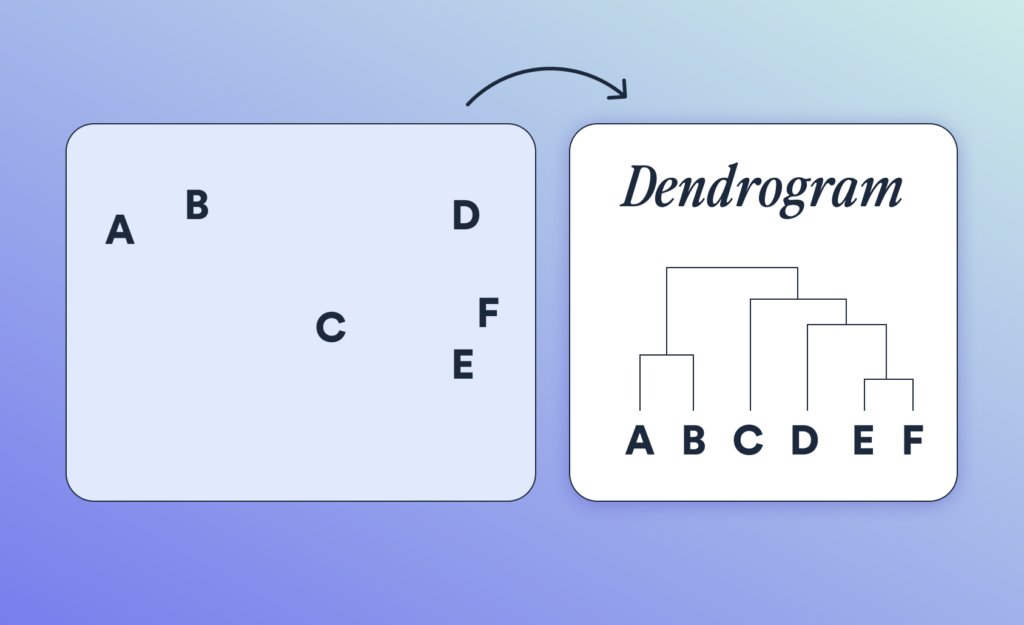
What is a cluster analysis dendrogram? A dendrogram (or clustering dendrogram) is a diagram that shows the hierarchical relationship between objects. It is most commonly created as an output from hierarchical clustering. Dendrograms are used in machine learning and data science to help visualize clustering. The main use of a dendrogram is to work out the […]
AI Clustering In Action | Find Hidden Insights Fast
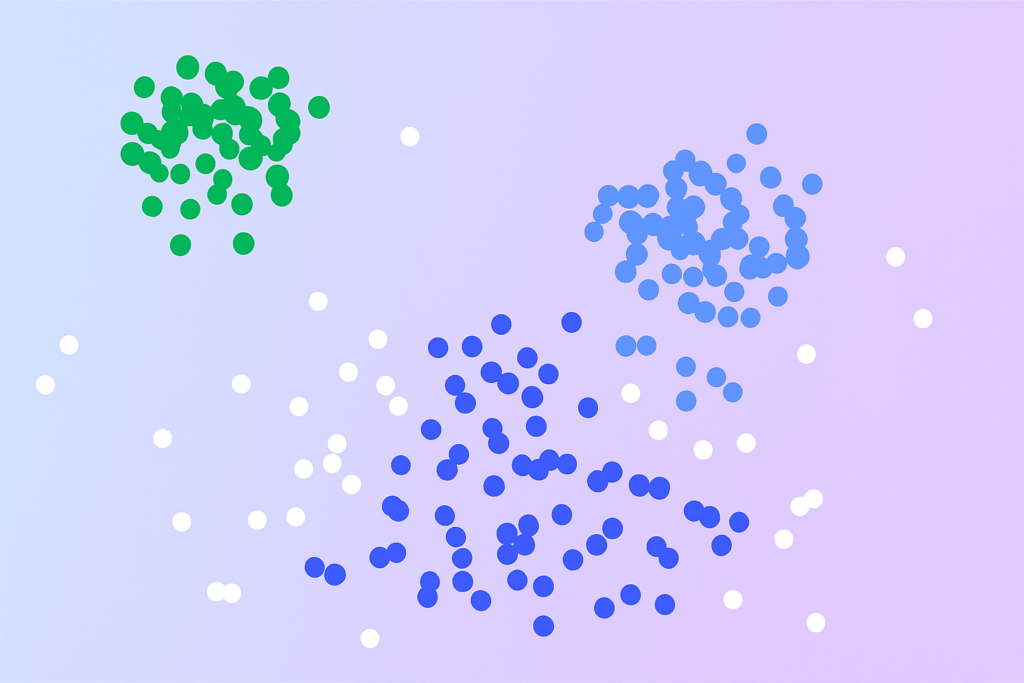
Cluster analysis is the process of grouping similar objects into groups (clusters) using specific algorithms. The final product is a set of clusters where each cluster is distinct from the others, but the clusters’ objects are more or less similar. It’s how researchers segment consumers, identify behavioral patterns, and uncover hidden structures in complex datasets. […]
What is Market Segmentation?

TL;DR Market segmentation is the process of dividing a market into distinct groups and tailoring strategies to each. It’s widely used across industries—from marketing and advertising to pricing and customer service. Key terms include: Customer segmentation: Focuses only on existing customers. Segmentation study: Uses surveys and algorithms to identify segments. Segmentation algorithm: Groups people using […]
How to Work Out the Number of Clusters in Cluster Analysis

Cluster analysis techniques (most of them) require users to specify the number of clusters that they require. There are six broad classes of approaches to choosing the number of clusters: penalized fit heuristics, statistical tests, the extent of association with other data, replicability, no small classes, and domain-usefulness. Penalized fit heuristics Provided there are no […]
What is Market Segmentation Research?

Market segmentation research is research that is used to help a firm identify segments in a market, with the end goal of developing different strategies and tactics for the different segments (i.e., market segmentation). Market segmentation research is often referred to as segmentation research. The output of segmentation research The table below is an example […]
How To Do K-Means Cluster Analysis In Displayr

The k-Means cluster analysis algorithm is a method for grouping similar cases into groups, or clusters. The final clusters will be different from each other, while the cases within a cluster are broadly similar to each other. In Displayr, we can run a k-Means Cluster Analysis by creating a k-Means object, selecting the clustering variables […]
What Are Segmentation Variables?

Market segmentation typically involves forming groups of similar people. The characteristics of people that are used to determine if the people are similar are called segmentation variables. For example, if segmenting a market is based on the age of people, then age is the segmentation variable. When people refer to segmentation variables, they are usually […]
Segmentation Tools | Visualize And Compare Your Data

The easy bit of market segmentation is creating segments. The hard bit is working out if the resulting segments are useful. In this post, I review tools four tools for making this process more efficient: using heatmaps to summarize lots of crosstabs, segment comparison tables, smart tables, correspondence analysis bubble charts, bubble charts that have […]
Segmentation Variables: Which Should You Use And Why?

This article discusses how to work out which segmentation variables are appropriate from a list of variables. If you do not yet have a list, please first read How to identify relevant variables for market segmentation. The choice of segmentation variables is one of the key strategic decisions when segmenting a market. As befits such […]
What Is Operational Segmentation?

An operational segmentation is a market segmentation that is integrated into the day-to-day running of a business and which guides operational decisions, such as how each and every customer and potential customer is greeted, which customers are given which offers, and what price they are offered. The alternative to an operational segmentation is an inspirational […]
Improving Segmentations Using Within Variable and Within Case Scaling

This post describes how to apply the three standard ways of scaling (transforming) rating scales data prior to using cluster analysis and other algorithms for forming segments: standardizing within variable, standardizing within case, and unit scores within variable. The post starts with a discussion of the reasons for scaling. Then, it reviews the three standard […]
How to Work Out the Number of Segments in a Market Segmentation

Strategic usefulness On choosing the number of segments, the key determinant is typically which number of segments leads to a solution that seems to have the most useful strategic and practical implications. This is usually judged best by the end-users of the segmentation, as this is a managerial rather than a statistical question. The no […]
How to Work Out the Number of Classes in Latent Class Analysis

Try your own Latent Class Analysis! Cross-validation Cross-validation on a latent class involves using only a subset of the data for each subject (or whatever other unit of analysis is used) when fitting a model for a specified number of classes, and then computing some measure of fit (e.g., log-likelihood) of the fitted model with […]
How to Reduce the Number of Segmentation Variables

A practical challenge when working out how to segment is that there are usually lots of possible variables, and you need to reduce that number. For example, if you use all the techniques in How to identify Relevant Variables for Market Segmentation, you will often end up with a very long list of segmentation variables. […]
How to Write “Golden Questions” for Market Segmentation

The main applications of golden questions are: As discovery questions in a sales scenario (e.g., a salesperson may be trained to ask a few questions, which allows them to work out the segment somebody is in) When collecting data in sign-up forms (e.g., industry, firm size) When screening people to participate in market research studies […]
How to Identify Relevant Variables for Market Segmentation

Conduct brainstorming sessions with the key stakeholders. A useful way of organizing such a brainstorming session is to give them the task of creating a segmentation tree, successively splitting the market based on key variables (e.g., splitting first based on users and non-users, then splitting each of these by another variable, and so on). Useful […]