






Pricing Research Software for Market Researchers
Whether you’re planning to increase your prices or pricing a new product, you can use Displayr for all your analyzing and reporting needs. Cut out half the time it takes deciding which technique is best.
Trusted by 2,900+ research teams worldwide
All the key tools for effective pricing research
Designed by pricing experts for pricing research
Before we started building Displayr, we were a data science consultancy that specialized in pricing research, and Displayr reflects this lineage. We’ve built in all the key tools that are required for pricing research.
Standard and advanced analysis tools
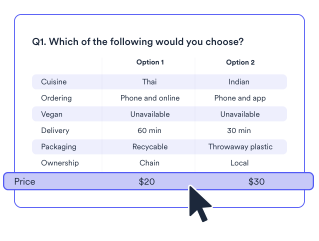
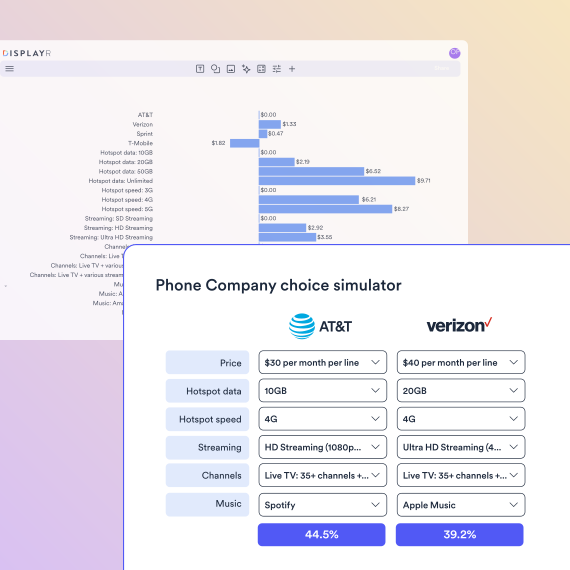
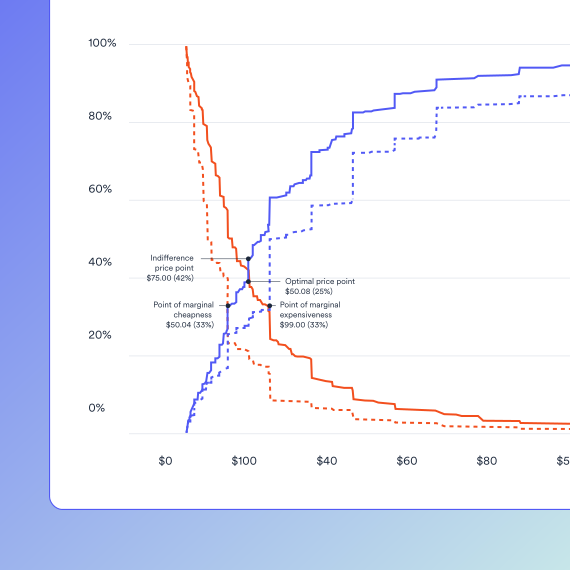
In addition to supporting all the standard analysis tools used in pricing research (driver analysis, log transforms, scatterplots, etc.), Displayr has conjoint analysis specifically designed for the analysis of numeric attributes (i.e., price variables), and a fully-automated Van Westendorp Price Sensitivity Meter visualization.
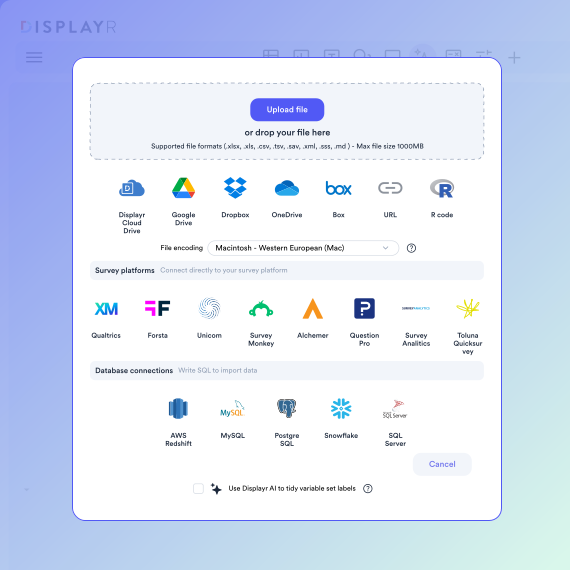
Deal with all data sources
Displayr can analyze data from surveys, sales records (e.g., from SQL), and cost data, so you can do all your analyses in the one app.
Fast to use
Drag and drop variables to perform your analysis. No need for writing code (unless you want to).
Complete (not just a pricing research tool)
Displayr is a general purpose app designed for pricing research, brand research, customer satisfaction, and pretty much any other type of analysis you need to do. This means that you can do all your work in one app.
Get AI-powered pricing recommendations in minutes
Displayr’s Research Agent streamlines pricing studies by turning raw data into clear, editable summaries of key findings and recommended actions. Branded decks and interactive dashboards are generated automatically so that you can move from data to decisions faster.

Vice President, Analytics, Leger
10x faster pricing research
All types of data
SQL, databases, Excel, CSV, text, SPSS, survey platforms, APIs, integrations, & more.
All types of analysis
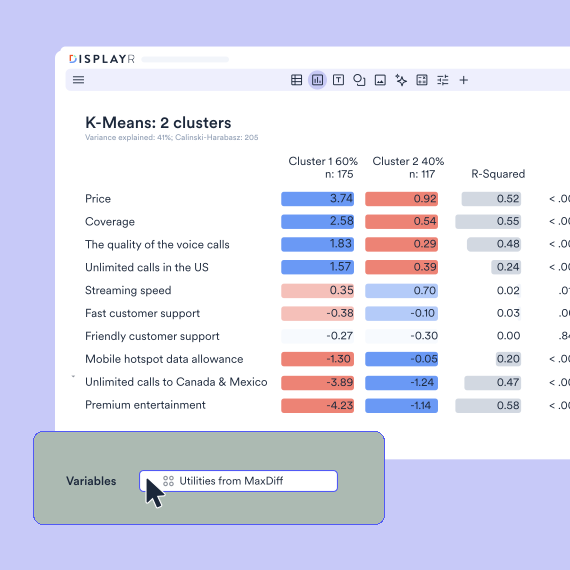
Summary tables, crosstabs, pivot tables, regression, text analysis, segmentation, machine learning, & more.
All types of reporting
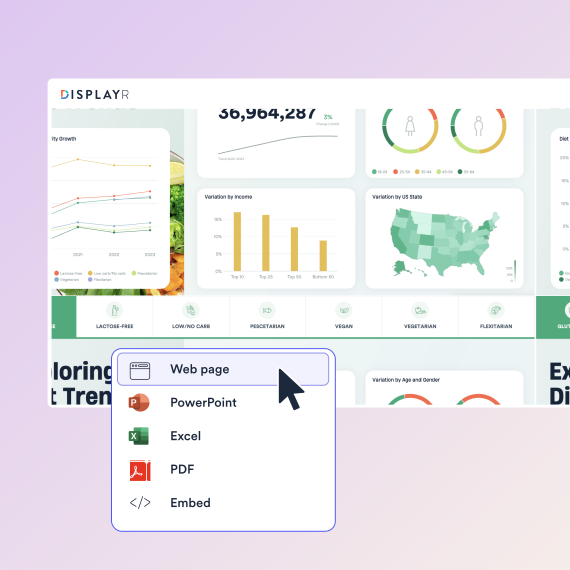
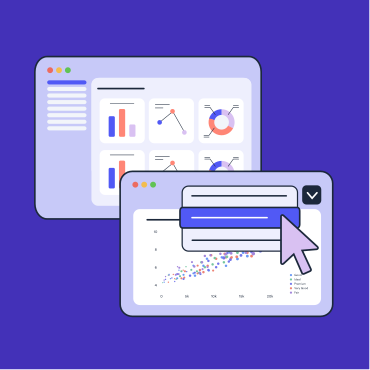
Data visualization, interactive data apps, dashboards, presentations, PowerPoint, Excel, PDF, web pages, & more.

Integrated AI
Displayr’s Research Agents integrate AI across your full workflow, from data cleaning to analysis to reporting.
Case Study - MAC RESEARCH
Global Market Research Agency
Displayr helps MAC Research cut reporting and analysis time by 2/3rds
Challenges
- Standard survey tools lacking advanced dashboard capabilities
- Searching for cutting-edge dashboard and reporting technology
Solutions
- Dashboard solution that automates manual processes
- All-in-one software designed by market researchers
Results
- Cut reporting and analysis time by 2/3rds
- 5x business growth in two years
See why people love Displayr
Pricing research FAQs
What is pricing research?
Pricing research is the process of gathering data to determine the optimal price for a product or service. It helps businesses understand customer willingness to pay, competitive pricing strategies, and market demand.
What are the different pricing research methods?
- Price salience – focuses on learning how conscious people are about price in a particular category.
- Price knowledge/awareness – contrast what people think they paid vs what they actually paid.
- Stated willingness-to-pay – asking people how much they would be willing to pay for an item.
- Pricing sensitivity meter intro – asking people multiple questions about price to determine an acceptable range (also known as Van Westendorp’s Price Sensitivity Meter).
- Random assignment asking pricing questions that closely resemble real-world decision-making (buy/not buy, purchase intention, demand curve, etc.)
- Choice-based conjoint – people are asked to trade-off between the features of alternative products.
How does choice-based conjoint work for pricing research?
How do you conduct pricing research?
Pricing research is conducted through surveys, experiments, and data analysis. Steps include:
- Defining objectives (e.g., willingness to pay, market fit).
- Choosing a research method (e.g., Van Westendorp, conjoint analysis).
- Collecting customer insights through surveys or A/B testing.
- Analyzing data to determine optimal pricing strategy.